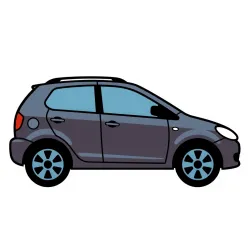
This API identifies and describes vehicles from an image. Its main objective is to provide an automatic and detailed analysis of the detected car, recognizing its make, model, estimated year, type, predominant color, visual condition, and other relevant external characteristics.
When an image is sent to the endpoint, the system processes the photograph using neural networks trained on millions of images of vehicles of different makes and models. The result includes a comprehensive report with structured information that is easy to integrate into applications or platforms.
In short, this API converts a simple image into an intelligent vehicle analysis, providing accurate visual and technical information. Thanks to its combination of artificial intelligence and image processing, it simplifies the processes of identifying, verifying, and classifying cars with a high degree of reliability and easy integration into any modern application.
Returns detailed information about an identified or analyzed vehicle, including make, model, estimated age range, type, color, physical condition, exterior features, and additional observations.
Vehicle Analyzer - Endpoint Features
| Object | Description |
|---|---|
Request Body |
[Required] File Binary |
{"status":"success","message":"Car analysis completed successfully","result":{"make":"Volkswagen","model":"Golf GTI","year":"2023","type":"hatchback","color":"gray","condition":"new and pristine, still in the shipping or display setup stage","exteriorFeatures":["LED headlights","red accent line on front grille","black alloy wheels","side mirrors with integrated turn signals"],"visibleModifications":["black wheels","red brake calipers"],"damages":["none visible, appears to be in perfect condition"],"confidence":"90 - Very high confidence based on the visible features and the vehicle's condition","additionalNotes":"The car is secured on a platform with straps, likely in a dealership or exhibition setting, awaiting transport or display."},"cacheTime":1761786349166,"metadata":{"language":"en","queryTime":"2025-10-30T01:05:49.166Z"}}
    curl --location 'https://zylalabs.com/api/11060/car+data+capture+api/20834/vehicle+analyzer' \
    --header 'Content-Type: application/x-www-form-urlencoded' \
    --form 'image=@"FILE_PATH"'
| Header | Description |
|---|---|
Authorization
|
[Required] Should be Bearer access_key. See "Your API Access Key" above when you are subscribed. |
No long-term commitment. Upgrade, downgrade, or cancel anytime. Free Trial includes up to 50 requests.
The Vehicle Analyzer endpoint returns detailed information about a vehicle, including its make, model, estimated year, type, color, condition, exterior features, visible modifications, damages, confidence level, and additional notes.
Key fields in the response include "make," "model," "year," "type," "color," "condition," "exteriorFeatures," "visibleModifications," "damages," "confidence," and "additionalNotes," providing a comprehensive overview of the analyzed vehicle.
The response data is structured in a JSON format, with a top-level object containing "status," "message," and "result." The "result" object includes detailed vehicle attributes, making it easy to parse and integrate into applications.
The endpoint provides information on vehicle make, model, year, type, color, condition, external features, modifications, damages, and a confidence level, offering a thorough analysis for identification and verification.
Data accuracy is maintained through the use of advanced neural networks trained on millions of vehicle images, ensuring reliable identification and analysis based on visual features and conditions observed in the input image.
Typical use cases include vehicle identification for dealerships, insurance assessments, inventory management, and enhancing applications that require vehicle recognition and classification based on images.
Users can utilize the returned data by integrating it into applications for vehicle verification, creating detailed reports, or enhancing user experiences in automotive platforms, leveraging the structured information for various functionalities.
Users can expect consistent data patterns, such as high confidence levels for well-defined vehicles and detailed descriptions for common makes and models, while less common vehicles may yield lower confidence and fewer details.
The Vehicle Analyzer endpoint primarily accepts an image file of the vehicle for analysis. Users should ensure the image is clear and captures the vehicle's exterior features for optimal results.
Users can customize their requests by providing images from different angles or with varying lighting conditions to enhance the accuracy of the analysis. However, the API does not support additional parameters beyond the image input.
The "confidence" field indicates the reliability of the analysis, while "condition" describes the vehicle's physical state. "ExteriorFeatures" lists notable characteristics, and "damages" highlights any visible issues, providing a comprehensive overview.
The API employs advanced neural networks trained on millions of vehicle images, ensuring high-quality analysis. Continuous updates and retraining of models help maintain accuracy and reliability in vehicle identification.
If the API returns partial or empty results, users should verify the image quality and ensure it clearly depicts the vehicle. Adjusting the image angle or lighting may improve the analysis outcome in subsequent requests.
The API is designed to analyze a wide range of vehicles, including cars, trucks, and SUVs, across various makes and models. It is applicable globally, but results may vary based on the vehicle's visibility and features in the image.
Users can expect high confidence levels for well-known makes and models, with detailed descriptions. Lesser-known vehicles may yield lower confidence and fewer details, reflecting the model's training data and image clarity.
Please have a look at our Refund Policy: https://zylalabs.com/terms#refund
To obtain your API key, you first need to sign in to your account and subscribe to the API you want to use. Once subscribed, go to your Profile, open the Subscription section, and select the specific API. Your API key will be available there and can be used to authenticate your requests.
You can’t switch APIs during the free trial. If you subscribe to a different API, your trial will end and the new subscription will start as a paid plan.
If you don’t cancel before the 7th day, your free trial will end automatically and your subscription will switch to a paid plan under the same plan you originally subscribed to, meaning you will be charged and gain access to the API calls included in that plan.
The free trial ends when you reach 50 API requests or after 7 days, whichever comes first.
No, the free trial is available only once, so we recommend using it on the API that interests you the most. Most of our APIs offer a free trial, but some may not include this option.
Yes, we offer a 7-day free trial that allows you to make up to 50 API calls at no cost, so you can test our APIs without any commitment.
Zyla API Hub is like a big store for APIs, where you can find thousands of them all in one place. We also offer dedicated support and real-time monitoring of all APIs. Once you sign up, you can pick and choose which APIs you want to use. Just remember, each API needs its own subscription. But if you subscribe to multiple ones, you'll use the same key for all of them, making things easier for you.
Service Level:
100%
Response Time:
823ms
Service Level:
100%
Response Time:
460ms
Service Level:
100%
Response Time:
1,344ms
Service Level:
100%
Response Time:
718ms
Service Level:
100%
Response Time:
2,256ms
Service Level:
100%
Response Time:
1,293ms
Service Level:
100%
Response Time:
981ms
Service Level:
100%
Response Time:
20ms
Service Level:
100%
Response Time:
955ms
Service Level:
100%
Response Time:
1,430ms
Service Level:
83%
Response Time:
224ms
Service Level:
91%
Response Time:
270ms
Service Level:
100%
Response Time:
890ms
Service Level:
100%
Response Time:
811ms
Service Level:
100%
Response Time:
881ms
Service Level:
100%
Response Time:
137ms
Service Level:
100%
Response Time:
581ms
Service Level:
100%
Response Time:
113ms
Service Level:
100%
Response Time:
1,451ms
Service Level:
100%
Response Time:
334ms