Bienvenido de nuevo
Inicia sesión en tu cuenta de Zyla API Hub


O
¿No tienes una cuenta? ¡Regístrate!
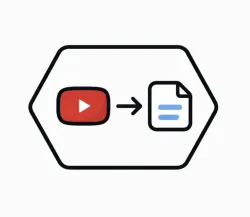
Extrae y convierte texto de videos de YouTube sin esfuerzo para mejorar tu estrategia de contenido y compromiso
{"transcription":"Writing code is writing a precise set of instructions a computer or device can understand. It's explaining exactly what you want your computer to do at any given moment. Computers need to know exactly how to react to things like the clicking of a mouse or the pushing of a button. And whatever happens ultimately is happening because of lines of code written by a human programmer. Just about anything with a plug or battery uses code. It's keeping our airplanes in the air. It's allowing you to swipe a credit card. And the computer doesn't know what to do in any given situation. It has to be taught everything. So you can think of a computer programmer explaining to a computer what we want it to do as like trying to give someone directions for how to drive somewhere when they don't even know what a car is. So you can see what kind of complications you'd run into. uh you'd have to not only tell them how to get to where they're going, but you'd also have to give them contingency plans for things like what if there's a traffic jam or what if a truck breaks down in the turn lane. And you'd even need to explain precisely how the steering wheel or gas pedal works. So that's kind of like a computer programmer writing code for a computer. They have to basically teach it everything every time. To understand that communication and how this process even started, you have to go back to the industrial revolution where the first computer program was invented in 1801 by a guy named Joseph Jakard. He developed a system of weaving instructions or code for his sewing looms that could be stored on cards with holes. And there was a mechanism that would go along the card and try to push a pin through. And so either the pin would go through or it wouldn't. It's binary. It's either it does or it doesn't. it's a one or it's a zero. And so if the pin goes through the hole, it would allow a rod attached to it to lift, which lifts the string and lifts the associated thread. And if the pin does not go through a hole, the pin doesn't move and the thread doesn't move. So essentially, the card would hold a preset pattern that is read by the loom and serves as a guide, giving the direction to the threads one at a time. And with this contraption, you could create very fancy pieces of weaving. And this idea of there being recorded information read by a machine was quickly borrowed to be applied to mathematical computation. Charles Babage invented the analytical engine in 1837 and it was basically a calculating machine. Eventually transistors are invented which replace punch cards as a way of transferring data. And nowadays, we use computers that have billions and billions of transistors, but still carrying that same basic idea of on and off to carry data. As a way of harnessing these various combinations of transistors, we use code. Computer programmers use different languages, whether it's Python for gaming, Java for desktop applications, or Objective C for an iPhone app. A computer program is only a text file following those rules and it's eventually translated into something the computer can understand. Just like the pins on Jakard's loom, a computer can only understand two things. Think of one and zero as the alphabet of a computer. It's like if you look at the alphabet of the English language, there's only 26 letters and by themselves, they're meaningless. But when you combine them into different ways, you get the Great Gatsby or Romeo and Juliet. In the same way, billions of different combinations of ones and zeros have the potential to give us Microsoft Word or iTunes. And the process goes like this. On the top level, you have a human writing code for a specific computer language. And after this, the code is translated or compiled into a low-level language by a tool called a compiler. And finally, the code is translated into binary or machine language by an assembler. So because we have a way of translating human orders in the form of code into ones and zeros that a computer can understand after that it's really just a matter of what you want the computer to do. And it's like being a chef writing a recipe because both chefs writing recipes and computer programmers writing code both have the ability to create something awesome using the resources and tools available. [Music] [Music]"}
curl --location --request POST 'https://zylalabs.com/api/11458/extract+youtube+video+text+api/21619/get+transcription' --header 'Authorization: Bearer YOUR_API_KEY'

--data-raw '{
  "url": "https://www.youtube.com/watch?v=N7ZmPYaXoic"
}'
Después de registrarte, a cada desarrollador se le asigna una clave de acceso a la API personal, una combinación única de letras y dígitos proporcionada para acceder a nuestro endpoint de la API. Para autenticarte con el Extraer texto de video de YouTube API simplemente incluye tu token de portador en el encabezado de Autorización.
| Encabezado | Descripción |
|---|---|
Autorización
|
Requerido
Debería ser Bearer access_key. Consulta "Tu Clave de Acceso a la API" arriba cuando estés suscrito.
|
Sin compromiso a largo plazo. Mejora, reduce o cancela en cualquier momento. La Prueba Gratuita incluye hasta 50 solicitudes.
(Ahorra 2 meses pagando anualmente 🎉)
La API Extract YouTube Video Text ofrece una solución robusta y eficiente para obtener transcripciones detalladas de cualquier video de YouTube compatible. Al proporcionar acceso directo al contenido hablado, la API entrega datos estructurados que incluyen el texto completo, marcas de tiempo, segmentos divididos automáticamente y metadatos esenciales del video como título, duración, lengua detectada y autor. Cada respuesta está optimizada para ser clara, consistente y fácil de integrar, lo que permite procesar grandes cantidades de contenido sin problemas.
El sistema analiza el video solicitado y devuelve bloques de texto organizados acompañados de sus respectivos intervalos de inicio y fin, asegurando precisión en el seguimiento de cada fragmento. Además, la API identifica automáticamente los subtítulos generados por YouTube, subtítulos automáticos y, donde sea aplicable, transcripciones personalizadas. Toda la información se entrega en un formato estandarizado que facilita su uso en aplicaciones, complementos, paneles o flujos automatizados.
Diseñada para el rendimiento y la fiabilidad, esta API maneja solicitudes de manera rápida y estable, manteniendo tiempos de respuesta consistentes incluso con videos largos.
En resumen, la API Extract YouTube Video Text es una herramienta profesional que permite obtener transcripciones completas y sincronizadas listas para su uso inmediato.
La API devuelve transcripciones detalladas de videos de YouTube incluyendo texto sincronizado marcas de tiempo para cada segmento y metadatos esenciales del video como título duración autor y idioma detectado
Los campos clave en la respuesta incluyen `videoId`, `videoTitle`, `duration`, `author` y un objeto `caption` que contiene segmentos con atributos `start`, `end` y `text` para cada segmento de la transcripción
La respuesta está estructurada en formato JSON con un objeto de nivel superior que contiene una bandera de estado metadata del video y un objeto de `caption` anidado que contiene un array de segmentos de transcripción cada uno con su propio tiempo y texto
La API proporciona información como el texto completo de la transcripción, las marcas de tiempo para cada segmento, el título del video, la duración, el autor y el idioma detectado del video, lo que permite un análisis completo
Los usuarios pueden personalizar las solicitudes especificando el `videoId` del video de YouTube que desean transcribir. Se pueden incluir parámetros adicionales en futuras actualizaciones para refinar la salida pero actualmente el enfoque principal está en el ID del video
La precisión de los datos se mantiene aprovechando el propio sistema de subtítulos de YouTube que incluye subtítulos automáticos y transcripciones personalizadas La API procesa estos datos para asegurar una salida confiable y sincronizada
Los casos de uso típicos incluyen la creación de subtítulos para videos la realización de análisis de contenido el desarrollo de herramientas educativas y la automatización de flujos de trabajo que requieren extracción de texto del contenido de video
Los usuarios pueden utilizar los datos devueltos integrándolos en aplicaciones para funcionalidad de búsqueda creando paneles para análisis de video o automatizando la generación de contenido basado en el texto transcrito y los metadatos








 Ejecutar en Postman